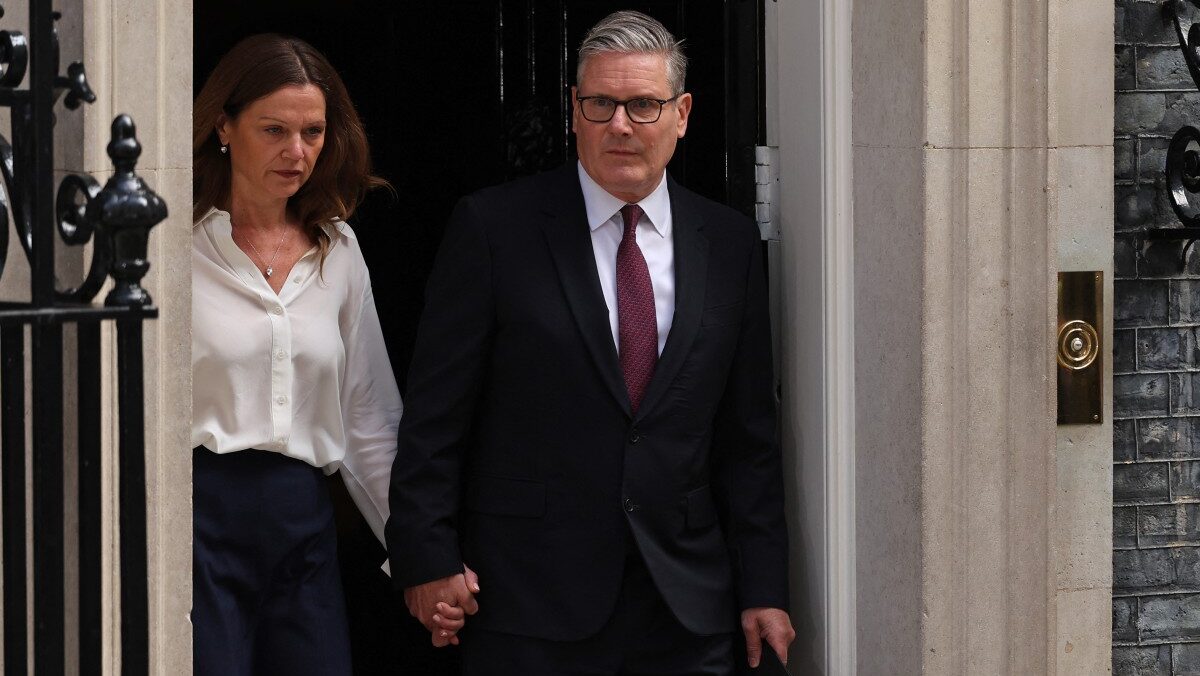
Starmer and his wife Victoria exit the door of 10 Downing Street as he prepares to announce his resignation
Adrian Dennis / AFP
British Prime Minister Keir Starmer has announced his resignation after less than two years in office, bringing a dramatic end to a premiership that began with a landslide election victory in 2024 but ended amid political turmoil, internal rebellion, and collapsing public support.
Speaking outside 10 Downing Street on Monday morning, an emotional Starmer confirmed that he would step down as leader of the Labour Party and remain in office only until a successor is chosen. He acknowledged that Labour MPs no longer believed he was the right person to lead the party into the next general election.
His departure follows weeks of mounting pressure after Labour’s poor local election results and last week’s Makerfield by-election, won decisively by former Greater Manchester mayor Andy Burnham, who is now the clear favourite to succeed him. More than 100 Labour MPs had reportedly called for Starmer to quit.
Reacting to the resignation, Reform UK leader Nigel Farage demanded an immediate general election, arguing that replacing one prime minister with another without consulting voters would lack democratic legitimacy.
“The electorate won’t accept being taken for fools,” Farage wrote. “Politics is about trust.” He argued that Burnham has no meaningful mandate to govern and accused Westminster of attempting to install a new prime minister without public approval.
Starmer’s downfall was all the more remarkable given the scale of his original success. Labour won a landslide majority in 2024 after campaigning on a promise of “change” following 14 years of Conservative government.
Yet many of the problems that would eventually bring him down emerged soon after entering office. According to Labour insiders, the government lacked a clear governing plan and struggled to define what “Starmerism” actually meant.
His government was further weakened by a series of unpopular decisions, including cuts to winter fuel payments for pensioners, major tax rises, and repeated policy U-turns that damaged his authority. Labour also faced growing public anger as huge numbers of illegal migrants continued crossing the English Channel despite repeated promises to tackle the crisis. As confidence in the government ebbed, many voters who had backed Labour in 2024 increasingly drifted towards Reform UK and the Greens.
Starmer was also damaged by the Mandelson affair, which raised serious questions about his judgement. After appointing veteran Labour figure Peter Mandelson as ambassador to Washington, Starmer was forced to defend the decision amid growing scrutiny of Mandelson’s links to convicted sex offender Jeffrey Epstein. When previously undisclosed emails emerged showing Mandelson praising Epstein and maintaining close ties with him after his conviction, Starmer dismissed him from the diplomatic post in September 2025. The scandal deepened further when police opened an investigation into allegations that Mandelson had leaked confidential government information to Epstein while serving as a Cabinet minister.
A new Labour leader, and therefore a new British prime minister, is expected to be in place by September.