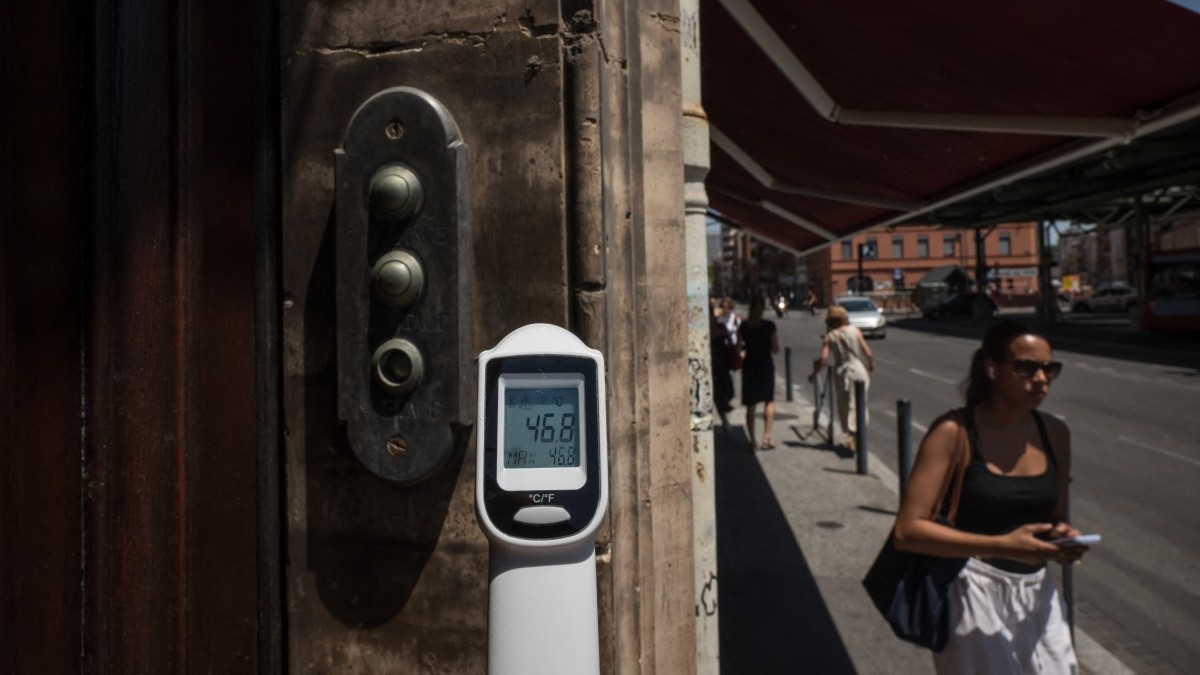
The exceptional heatwave gripping France has triggered an extraordinary political reversal on one of the country’s most contentious climate-related issues: air conditioning.
As temperatures reached record levels and more than half of France was placed under the highest heat alert, political leaders from across the spectrum have increasingly recognized air conditioning as a necessary response to extreme heat. Most striking, however, has been the dramatic shift among Green politicians, who for years treated air conditioning as environmentally harmful and emblematic of the wrong approach to climate adaptation.
With Tuesday, June 23rd, becoming the hottest day recorded in France since 1947, and Prime Minister Sébastien Lecornu announcing stronger mobilization of the healthcare system, many politicians who once opposed widespread air conditioning have found themselves confronted by the practical realities.
One of the notorious examples of this change came from Marine Tondelier, national secretary of the Green Party. She acknowledged what she described as a long-standing “taboo” surrounding air conditioning, while stressing that it should not become “a solution to everything.”
“The reality is that services such as schools and hospitals need to be equipped with air conditioning. There are places where we can no longer do without air conditioning,” she said during an appearance on LCI on June 20th. Those around Tondelier emphasized that there should be “no dogmatism and no anti-air-conditioning stance,” while maintaining that cooling systems should be viewed primarily as an emergency response.
Yet this newfound pragmatism stands in contrast to the political debate that unfolded only a year earlier.
During the severe heatwave of 2025, temperatures in parts of France approached or exceeded 40°C. Schools across the country were forced to close as classrooms became dangerously hot. At the time, politicians on the Right argued that cooling systems were becoming a necessity, pointing to the conditions faced by schoolchildren, patients, the elderly, and workers.
The response from much of the environmentalist Left was very different. Rather than supporting widespread installation of cooling systems, Green politicians attacked such proposals as environmentally misguided. The debate became heavily politicized, with air conditioning increasingly portrayed as a right-wing solution.
Today, many of the same political figures who resisted calls for air conditioning now acknowledge that it is indispensable in schools, hospitals, and other public services. The willingness of Green politicians to embrace air conditioning today may reflect an acceptance of reality, but it also invites scrutiny over why similar arguments were rejected just a year ago when schools were closing, children were sitting in overheated classrooms, and political opponents were already calling for many of the same measures now being endorsed across the political spectrum.