Who would have thought that a single dispute of memory politics could open the floodgates and turn Ukraine’s biggest supporters within the EU against Kyiv in a matter of weeks? Warsaw’s willingness to aid Ukraine’s war effort is still there, but the Polish people seem to have increasingly had enough of Zelensky’s shenanigans.
As we reported, Ukraine’s President Zelensky has recently been stripped of his Order of the White Eagle, the highest state merit in Poland, for naming a Ukrainian army unit “Heroes of the UPA”—a tribute to the Ukrainian Insurgent Army that massacred some 130,000 civilians belonging to ethnic minorities between 1943 and 1945, of which 100,000 were Poles, native to what is now Western Ukraine.
While Zelensky submitted to the decision of conservative Polish President Karol Nawrocki, he refused to revoke the name, admit that he made a mistake, or even acknowledge that the bloody campaign took place. Instead, the Ukrainian president described the dispute as merely stemming from “conflicting interpretations” of historical events, arguing that the UPA remains an important national symbol of anti-Soviet resistance.
Now, backlash over the scandal grows on both sides of the Polish-Ukrainian border. In Ukraine, a growing number of leading politicians have also decided to relinquish their own awards in protest against Warsaw, including Zelensky’s right-hand man, Kyrylo Budanov, as well as former presidents Leonid Kuchma and Viktor Yushchenko.
In turn, opposition figures in Poland increasingly accuse Ukrainians of being ungrateful, and have begun to call for the return of military equipment as well. “If everyone is getting so excited that they are returning what they received, let them return the MiGs, tanks, and weapons too. That would be a gesture, right?” former PM Leszek Miller commented.
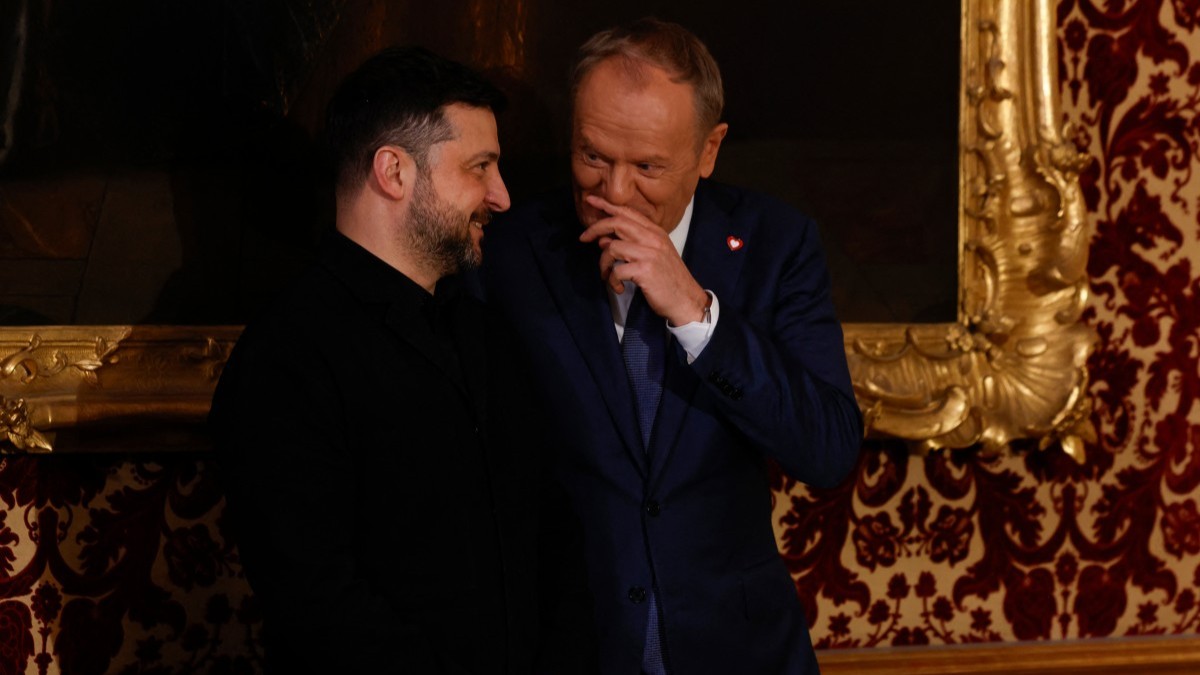
Meanwhile, PM Donald Tusk’s liberal coalition is trying to downplay the significance of Zelensky’s decision, which only fuels Poles’ anger. “If we quarrel about the past, someone else will win the future,” Tusk said, warning not to give Putin a “reason to rejoice” by criticizing Zelensky.
The biggest backlash, however, came after Deputy Higher Education Minister Andrzej Szeptycki went as far as to defend the UPA as heroic freedom fighters, comparing them to Poland’s “Cursed Soldiers,” anti-communist Polish partisans resisting Soviet domination.
Przemysław Czarnek, a former minister of the conservative opposition party PiS and its prime ministerial candidate for next year, immediately questioned Szeptycki’s loyalty and demanded answers from the government.
“I demand a suspension of parliamentary proceedings until it is explained why this government still employs pro-Ukrainians who insult Poles,” Czarnek said in the Sejm.
Political commentators note that in the run-up to the 2027 parliamentary election, virtually the entire political spectrum “is competing over increasingly anti-Ukrainian rhetoric”—except maybe Tusk’s ruling Civic Coalition—which reflects a wider change in how voters began to view the question of endless military aid and financial support to over 1.5 million refugees in the fifth year of the war.
So far, Poland has provided Ukraine with €5.86 billion in bilateral aid, as well as €3.37 billion in joint EU aid, or a total of €9.23 billion, excluding the money spent on accommodating refugees.
According to a recent CBOS survey, a plurality of Poles (43%) now hold unfavorable views toward Ukraine, compared to only 29% expressing sympathy toward their neighbor. That’s a remarkable reversal in just two years, as in 2023, some 51% were sympathetic, and only 17% reported being unfavorable to Ukraine.
These trends indicate that the longer the war goes on and the refugees remain in Poland, the less willing the native population will be to finance Ukraine’s war effort. Which is something that Tusk will definitely need to take into account before the 2027 October election if he wants to stay in power.
Currently, Tusk’s Civic Coalition (KO) is leading the polls with 33%, but the conservative PiS is closely behind with 27%, while the nationalist Konfederacja is locked in 3rd place with 13%.