Vienna became the main political showcase of Europe’s patriotic Right this weekend.
The Austrian Freedom Party (FPÖ) marked its 70th anniversary with a two-part event that brought together some of the most influential figures in this political camp: an international conference at the Hofburg and a large public rally at Stephansplatz, in the heart of the Austrian capital.
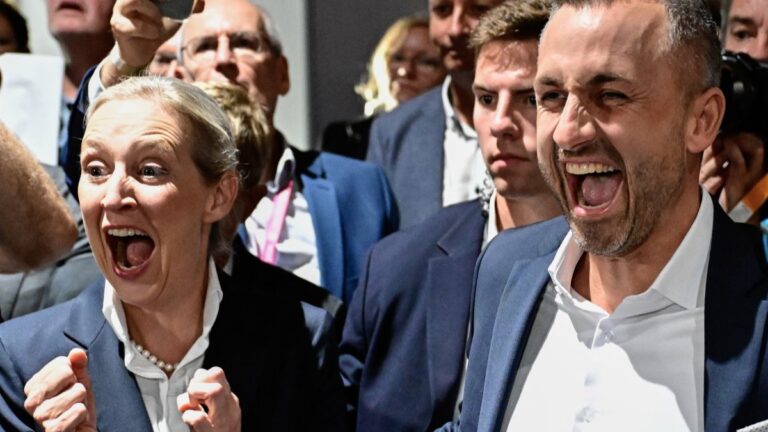
The presence of figures such as Viktor Orbán, Geert Wilders and Alice Weidel turned the FPÖ anniversary into something more than a national celebration. The event was designed as a demonstration of political cohesion on a continental scale at a time when patriotic parties continue to expand their influence across numerous member states and within European institutions.
The day began with a political conference at the historic Hofburg Palace, where FPÖ leader Herbert Kickl welcomed delegations from several European countries. When he walked up to the stage in Stephansplatz, Kick was announced as the future chancellor of Austria, which may very well be a credible assessment, given that his party has a staggering 37% support according to a June 2, 2026, Poll of Polls, way ahead of the centre-right Austrian People’s Party (ÖVP) and the third-placed Socialists (SPÖ).
The message shared by participants centred on the defence of national sovereignty, migration control, and criticism of the growing political centralisation driven from Brussels.
However, it was the second part of the celebration that produced the most striking images.
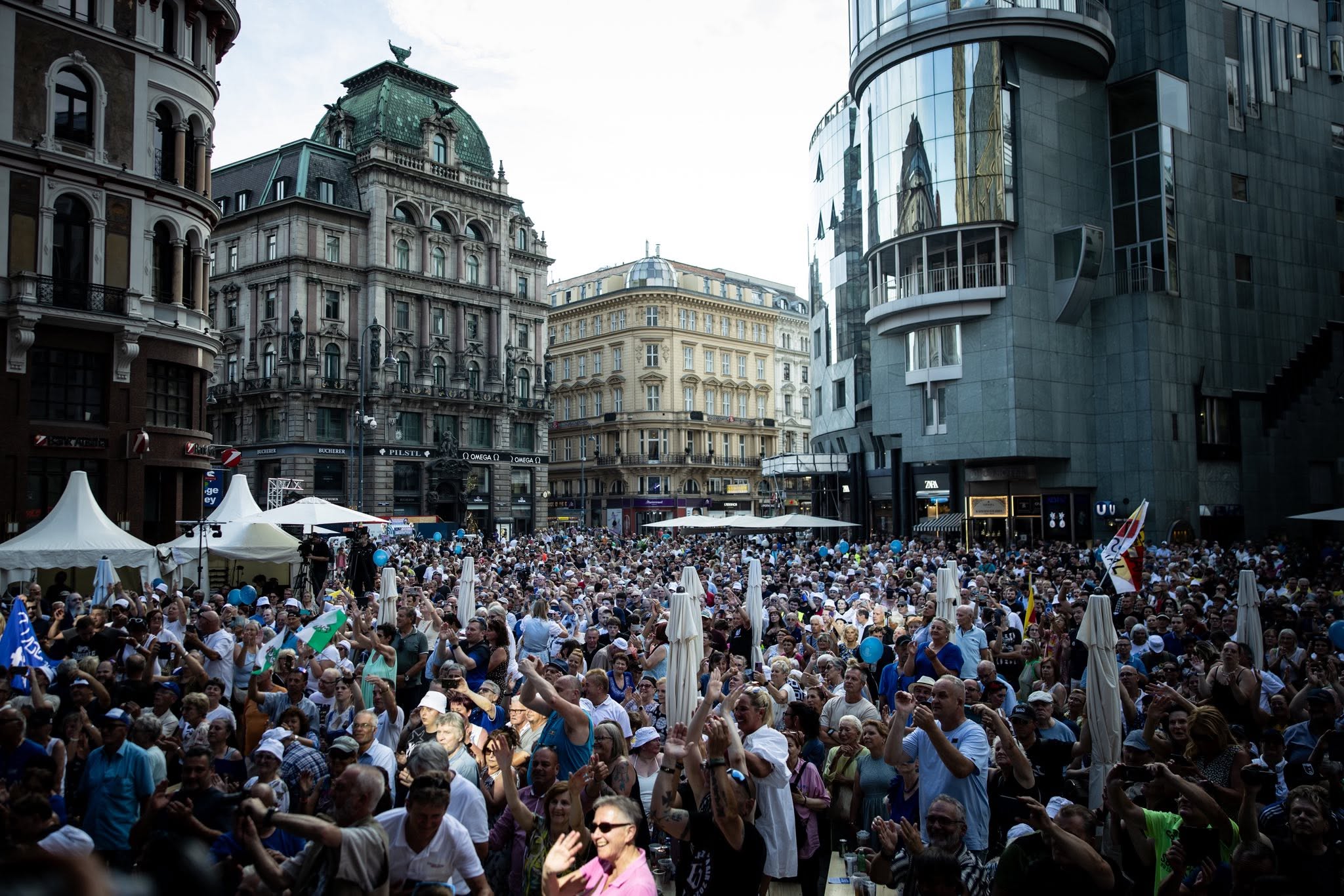
Thousands of supporters gathered at Stephansplatz to take part in an open-air event that the FPÖ presented as a popular festival, although, in practice, it also served as a demonstration of its mobilisation capacity. The square and surrounding streets remained packed for much of the afternoon as the main guests addressed the crowd.
One of the most talked-about moments was Orbán’s appearance before supporters. Various videos circulating on social media show the Hungarian leader walking among attendees as numerous people ask for photographs and greet him as he arrives. For several minutes, chants of “Viktor, Viktor” echoed through the square, reflecting the level of popularity the Hungarian prime minister continues to enjoy among broad sections of the European Right.
The significance of the event lies less in its national dimension than in its European one. It is rare to see, on the same stage, leaders representing some of the continent’s most important patriotic movements.
Wilders currently leads the largest right-wing political force in the Netherlands, despite electoral fluctuations and internal criticism. Orbán remains the leading reference point for Central European sovereigntism, and developments in Budapest continue to reinforce the validity of his political vision. Weidel heads an Alternative für Deutschland (AfD) that leads the polls and continues to grow in Germany, despite the political cordon sanitaire imposed by much of the establishment.
The gathering also served to highlight the growing coordination between the various forces grouped around Patriots for Europe and similar political networks, now among the most dynamic blocs in the European Parliament. While Brussels continues to grapple with internal divisions over migration, energy, sovereignty and EU enlargement, the leaders gathered in Vienna sought to project the image of an increasingly consolidated political alternative.
Seventy years after its founding, the FPÖ used its anniversary to send a message that extends far beyond Austria: the European patriotic movement no longer operates as a collection of isolated national parties but increasingly as a coordinated political network seeking to exert a decisive influence on Europe’s future direction.