What began as a project week at a public school in Saxony, Germany, has ended in a police investigation and an internal review of the regional education system.
As we reported, two activists with no ties to the school system introduced explicit pornographic material and political propaganda into a classroom with 14- and 15-year-old students. No teacher was present during the session.
The facts are not in dispute. During an activity held in March at the Oberschule in Schleife, in the Görlitz district, two activists who identified themselves as ‘non-binary’ were invited to lead a workshop supposedly linked to theatre or anti-discrimination work. Once alone with the students, they spread explicit pornographic images on the floor—photographs of men engaged in sexual acts—alongside leaflets bearing political slogans such as “F**k AfD” and “[AfD politician Björn] Höcke is a Nazi.”
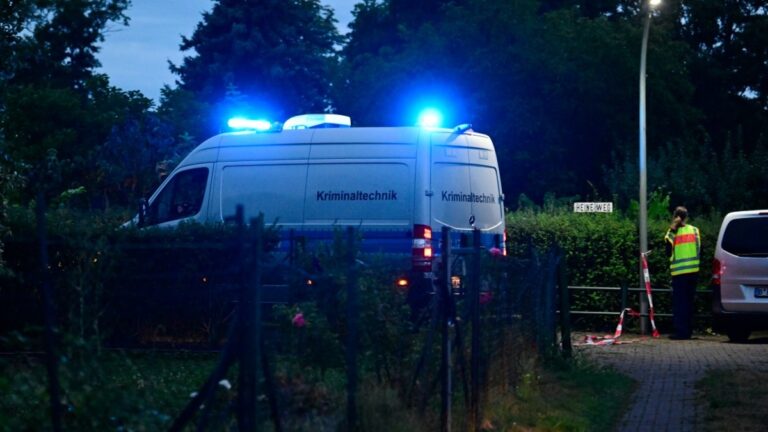
The response did not come from institutions, but from families. It was the students themselves who, upon returning home, described what had happened. Some had taken photographs as evidence. Several families went to the Weißwasser police station to file complaints for possible violation of Section 184 of the German Criminal Code, which prohibits the distribution of pornography to minors. Since the perpetrators did not fully identify themselves, they appear in the case files as “unknown persons.”
From there, the case escalated. Regional media confirmed that the pornographic material was shown in the classroom and that the school cancelled the project that same day following the complaints. Saxony’s State Office for Schools and Education (LASUB) has opened a review to determine whether education legislation was breached and has announced changes to the oversight mechanisms governing external activities.
But the story does not end there. According to several reports, those responsible for the workshop are linked to the Amadeu Antonio Foundation, an organisation largely funded by public money and well known for its programmes against “extremism” and in support of ‘queer’ education. Following the scandal, the foundation itself suspended its activities within the affected programme.
What happened is not an isolated failure but a recurring pattern: the entry of actors with no legal standing in the education system, the absence of teacher supervision, content not previously communicated to families, and an institutional response that comes only after the fact.
The situation points to an increasingly widespread model in the German education system: the outsourcing of sensitive content—civic education, diversity, and sexual identity—to a network of NGOs that operate with institutional legitimacy but with little direct oversight. Under political pressure to demonstrate action against “extremism” and to advance diversity agendas, many schools delegate to these actors without any genuine scrutiny of the content involved.
In that context, the Schleife case looks like an almost logical product of the system. Not an anomaly, but a consequence.
The political dimension reinforces that reading. The inclusion of explicitly anti-AfD messaging was no accident. In the 2025 U18 youth elections, around 75% of students at the school are reported to have backed that party. The classroom thus becomes a space for ideological intervention—no longer education, but political correction.
AfD leader Tino Chrupalla has called for a ban on schools cooperating with organisations that promote gender ideologies and for restrictions on the presence of such activists in classrooms. Until recently, that position would have been considered fringe. After Schleife, it enters the realm of legitimate debate. But it remains far from the realm of the condemnable.